
Startup Accelerators: What Founders Learn in 8-12-20 Weeks That Takes Others Years to Realize
Why the best startup acceleration programs don’t just help a team — they upgrade their founder operating system.
Pancrazio Auteri
Every founder thinks they know what an accelerator does.
“You get a pitch deck.”
“You meet mentors.”
“You prep for demo day.”
Sure — those things happen. But they’re just the surface.
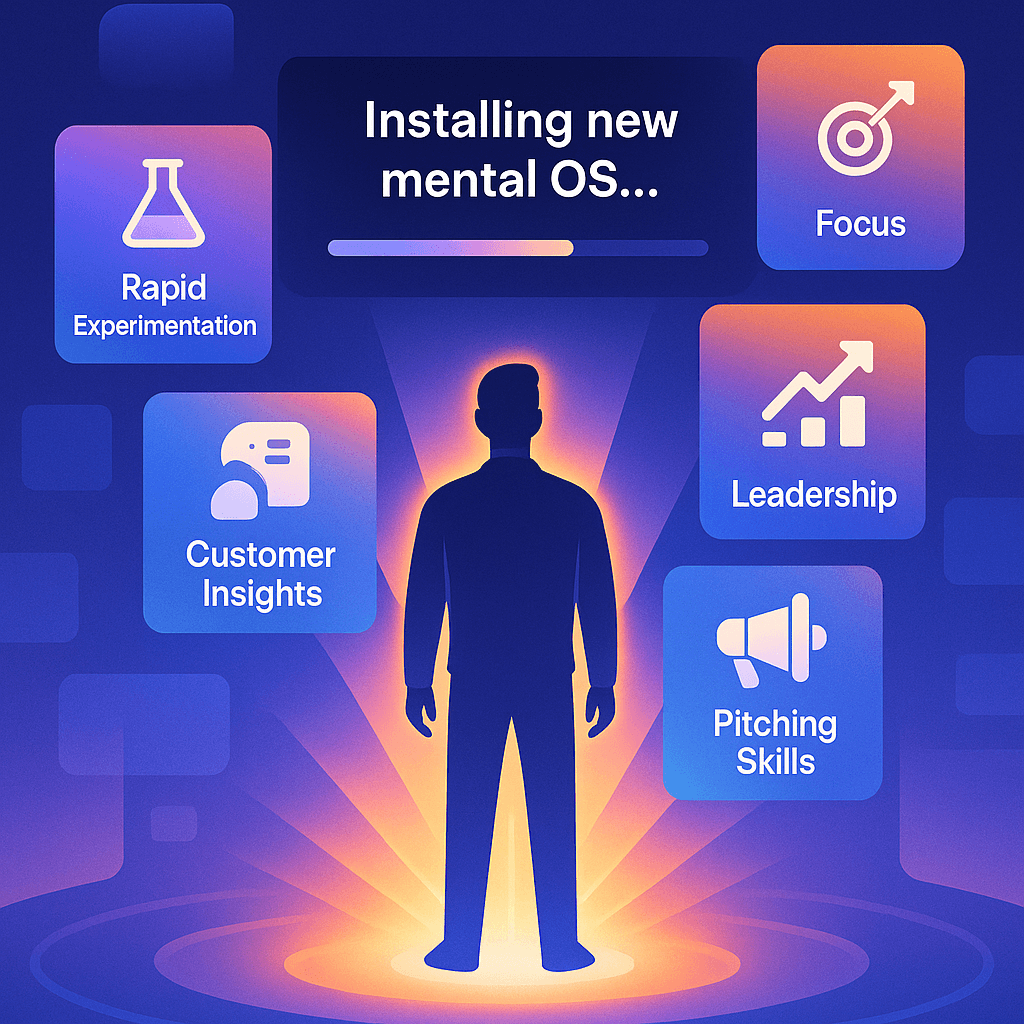
The real magic of a great accelerator is that it installs a new operating system in your brain.
A different way of thinking.
A different way of building.
A different way of leading.
Founders enter as builders with an idea.
They leave as leaders with clarity, evidence, narrative, discipline and momentum.
If you’re preparing to join an accelerator — or deciding whether you should — here’s what actually happens inside and how to prepare so you get the most out of the experience.
1. You Stop Building “What’s Cool” and Start Solving a Burning Problem
Before:
Founders build from intuition:
“This feature is cool.”
“I would use this.”
“We’ll build it now and validate it later.”
Inside a great accelerator:
Everything becomes centered around the customer.
You talk to users weekly.
You build for a specific problem.
You develop customer discovery as a habit, not an event.
You’ll get pushed to answer with confidence:
“This solves a high-priority job for a well-defined customer — and here’s the evidence.”
How can you prepare? Start talking to customers now. The reps you do before the program count. A lot.
2. Your Positioning Snaps Into Focus
Most founders enter with fuzzy messaging and a vague ICP.
Accelerators force you to sharpen it.
You’ll leave with:
A precise definition of who you serve
A clear articulation of their core struggle
A concise, memorable value proposition
A repeatable narrative you can use with customers, partners and investors
Prepare by writing your current positioning as it stands — even if it’s messy. You’ll have something to refine with your mentors and peers. From Day One.
3. You Replace 12-Month Build Cycles with Weekly Experiments
One of the biggest transformations is shifting from “build for months, launch and hope” to “test constantly.”
Inside a strong accelerator, founders start experimenting weekly:
Prototypes
Landing pages
Pricing tests
Messaging tests
Activation and onboarding flows
Sales scripts
Momentum suddenly becomes predictable.
Prepare by letting go of perfectionism. You’re not there to show how polished you are — you’re there to learn fast.
4. You Develop a Real Operating Rhythm
Great accelerators are structured: weekly check-ins, KPIs, mentor reviews, accountability loops.
This rhythm becomes your company’s new backbone.
Suddenly:
Priorities stop shifting wildly
You use frameworks intentionally
You learn sequencing: the right moves, in the right order
You stop “doing everything” and start doing what matters
Prepare by bringing your current roadmap. And honesty about what’s working and what’s fuzzy, ambiguous or just chaos.
5. You Shift from “Founder Doing Everything” to “Founder Building a Company”
In the early days, founders try to do everything themselves.
Accelerators challenge that instinct.
You begin to see:
Delegation as leverage
Hiring as strategic
Culture as intentional
Leadership as a skill you develop, not just stumble into
Prepare by listing what only you must do — and what you’re still doing that someone else should own.
6. You Learn Strategic Networking (Not the Coffee-Chat Olympics)
Founders often confuse “talking to lots of people” with networking.
Great accelerators break that habit.
You’ll learn:
How to build trust quickly
How to make targeted asks
How to follow up properly
How to turn introductions into outcomes
How to leverage a network without abusing it
Prepare by making a list of the relationships that would meaningfully change your trajectory.
7. Your Pitch Evolves from “Feature Demo” to “Investment Story”
Before joining, many founders pitch like they’re giving a product demo.
Inside an accelerator, this transforms into a clear, compelling narrative:
Market Insight → Inevitable Shift → Struggle → Solution → Impact → Traction → Market → Why Now → Why Us → Ask
It becomes concise, emotional and memorable.
By the time you finish the program, you’re no longer pitching features — you’re pitching a future.
Prepare by bringing your current pitch, even if you’re embarrassed by it. Accelerators love raw clay. Seeing your message finally working outside your head is priceless.
8. You Become More Focused, Disciplined and Comfortable Saying “No”
Founders often enter the program chasing too many ideas and responding to every request.
Accelerators teach a fundamental lesson:
Focus is a superpower.
Inside, you learn to say no — often and proudly — because you now understand the cost of every yes.
Prepare by listing the distractions you already know you should cut. Be ready to drop them.
9. Your Credibility Increases Overnight
This is the quiet benefit founders underestimate.
Being accepted into a respected accelerator gives you an immediate boost:
Investors take you more seriously
Warm intros come easier
Cold outreach converts better
Industry experts respond faster
You suddenly feel “real” in the eyes of the ecosystem.
Prepare by drafting your Day 1 announcement and the targeted reach-outs that follow.
10. You Start Building a Company, Not Just a Product
This is the deepest shift.
You begin seeing your startup as an integrated system:
Product
Distribution
Sales
Pricing
Capital strategy
Market timing
Hiring
Operations
Brand
Everything connects.
Everything reinforces everything else.
You and your co-founders fully experience the upgrade of this new operating system.
Prepare by writing down your current assumptions about business model and go-to-market strategy. This becomes your starting point.
How to Arrive Ready for an Accelerator
1. Set a clear learning goal
Not “raise money,” but something like:
Validate ICP
Prove willingness to pay
Test GTM motion
2. Bring customer conversations
You’ll need them from Day 1. Not negotiable.
3. Clear your calendar
Accelerators reward intensity. If you can’t focus for 8-12-20 weeks, you have a problem.
4. Be brutally transparent
Mentors can only help with the truth.
5. Expect discomfort
Breakthroughs usually start with “Okay… I’ve been thinking about this wrong.”
How to Make the Program Transform You (Not Just Support You)
1. Run weekly experiments
Consistency beats brilliance. No need for genius ideas. Clarity, method and discipline deliver.
2. Share your learnings early and often
Acceleration happens through exposure. Your peers in the cohort will do the same for you.
3. Treat feedback like an accelerant
The sharpest insights often come wrapped in discomfort.
4. Build relationships with intention
A great accelerator’s network compounds long after the program ends.
5. Show momentum every week
Investors don’t invest in potential — they invest in velocity. Show them your trajectory.
After Graduation: Keep the Operating System Alive
When the program ends, don’t revert to old habits.
Keep:
Talking to users and potential customers
Testing
Iterating
Updating your pitch
Building your network
Prioritizing ruthlessly
Operating with focus and discipline
Momentum is a muscle. Maintain it.
In One Sentence
A great accelerator doesn’t just accelerate your startup — it accelerates you.
You enter as someone building a product. You leave as someone capable of building a company.
Ad maiora!
Pan Out